
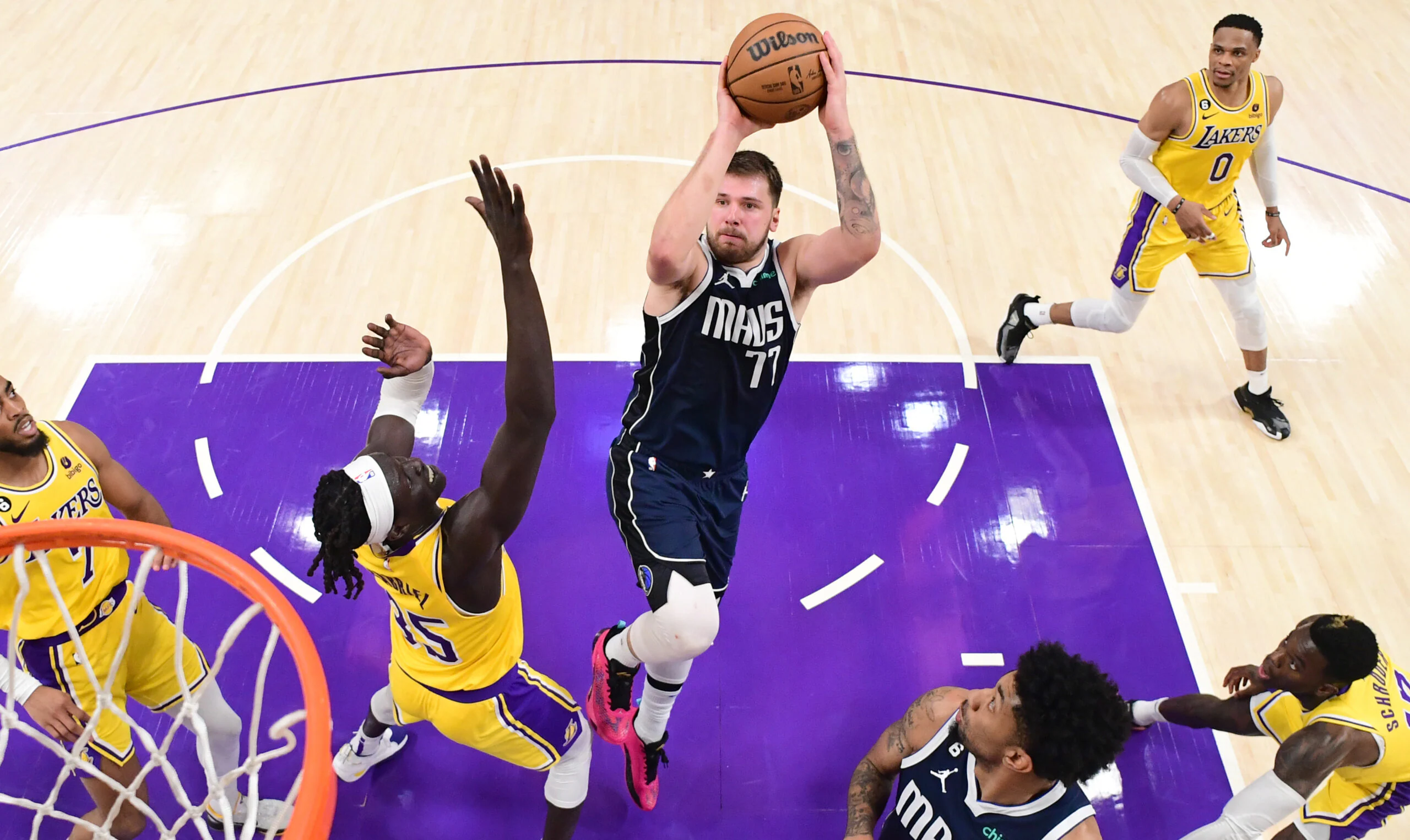
Lakers vs Dallas Mavericks match player stats always attract massive attention from NBA fans because both teams feature superstar talent and contrasting playing styles. Whenever Los Angeles and Dallas meet on the court, the game turns into a showcase of elite scoring, tactical adjustments, and individual brilliance. From LeBron James controlling the tempo to Luka Dončić orchestrating the offense, every possession adds layers to the statistical story of the match.
This detailed analysis dives deep into the match, highlighting how individual performances shaped the outcome, how supporting players contributed, and why these numbers matter beyond just the final score.
Match Context and Game Flow
The clash between the Lakers and the Mavericks was not just another regular-season encounter. It was a statement game for both franchises. The Lakers entered the match focusing on defensive balance and transition offense, while Dallas relied heavily on spacing and shot creation.
From the opening quarter, the pace was high. The Lakers looked to attack the paint early, while the Mavericks stretched the floor with perimeter shooting. This contrast in approach reflected clearly in the lakers vs dallas mavericks match player stats, especially during the first half.
Lakers Offensive Player Stats Overview
The Lakers’ offensive output was driven by experience and physical dominance. LeBron James once again proved why he remains central to the team’s success. His scoring was not forced; instead, it came within the rhythm of the game.
Anthony Davis played a critical role inside, drawing defenders and opening lanes for others. The Lakers’ guards supported the stars by maintaining ball movement, which reflected positively in assist numbers.
Below is a snapshot of key Lakers player performances:
| Player | Points | Rebounds | Assists | FG% |
|---|---|---|---|---|
| LeBron James | 28 | 8 | 9 | 52% |
| Anthony Davis | 24 | 12 | 3 | 55% |
| D’Angelo Russell | 18 | 3 | 6 | 47% |
| Austin Reaves | 14 | 4 | 5 | 45% |
| Rui Hachimura | 12 | 6 | 2 | 50% |
These numbers underline how balanced scoring contributed to the Lakers staying competitive throughout the match.
Dallas Mavericks Offensive Player Stats Overview
Dallas relied heavily on creativity and shot-making. Luka Dončić dominated the ball, but his usage was efficient rather than excessive. His ability to score, assist, and draw fouls defined the Mavericks’ offensive identity in this game.
Kyrie Irving complemented Luka perfectly, providing quick scoring bursts and clutch shot-making. The supporting cast chipped in with timely three-pointers, which played a major role in maintaining momentum.
Key Mavericks player stats included:
| Player | Points | Rebounds | Assists | FG% |
|---|---|---|---|---|
| Luka Dončić | 32 | 10 | 11 | 50% |
| Kyrie Irving | 26 | 5 | 4 | 48% |
| Tim Hardaway Jr. | 17 | 4 | 2 | 46% |
| Dereck Lively II | 10 | 9 | 1 | 60% |
| Josh Green | 11 | 3 | 3 | 44% |
This stat line highlights how Dallas leaned on star power while still getting meaningful contributions from role players.
Head-to-Head Superstar Comparison
One of the most talked-about aspects of the game was the direct comparison between LeBron James and Luka Dončić. The lakers vs dallas mavericks match player stats clearly show how both stars influenced the game differently.
LeBron focused on efficiency and leadership, choosing moments to score while involving teammates. Luka, on the other hand, took on the role of a primary creator, leading Dallas in points and assists. Their contrasting styles made the matchup fascinating and statistically rich.
Defensive Impact Reflected in Stats
Defense often goes unnoticed in casual viewing, but the numbers tell a deeper story. Anthony Davis recorded multiple contested shots and altered several attempts at the rim, which does not always show up fully in box scores. His rebounding numbers, however, clearly reflect his defensive presence.
For Dallas, Dereck Lively II provided rim protection, limiting easy paint points during critical stretches. Steals and blocks may not dominate headlines, but they significantly influenced possession control in this game.
Bench Contributions and Role Players
Bench performance often determines close games, and this match was no exception. The Lakers’ second unit provided steady scoring and defensive energy, preventing momentum swings when starters rested.
Dallas’ bench focused more on spacing and defense, ensuring that Luka and Kyrie could operate without constant pressure. When reviewing lakers vs dallas mavericks match player stats, bench points played a crucial role in keeping the contest tight through all four quarters.
Shooting Efficiency and Shot Selection
Efficiency is a key metric in modern basketball. The Lakers showed strength in mid-range and paint scoring, reflected in their higher field goal percentage inside the arc. Dallas, meanwhile, relied more on three-point attempts, which created variance throughout the game.
The shooting splits highlight how strategic choices impact outcomes. While Dallas attempted more threes, the Lakers’ ability to convert high-percentage shots kept them competitive despite fewer perimeter attempts.
Rebounds, Assists, and Hustle Stats
Rebounding battles often decide momentum. The Lakers held a slight edge in total rebounds, largely due to Anthony Davis’ dominance on the boards. This advantage translated into second-chance points, which proved vital.
Assists numbers also tell an interesting story. Dallas led slightly in assists, showcasing ball movement and spacing. These hustle stats add depth to the lakers vs dallas mavericks match player stats, emphasizing team-oriented play beyond individual scoring.
Fourth Quarter Performance Analysis
The final quarter was where stars truly separated themselves. Luka Dončić scored or assisted on the majority of Dallas’ points during this period, demonstrating his clutch ability. LeBron James responded with timely baskets and smart playmaking, ensuring the Lakers stayed within reach.
Fourth-quarter stats often define narratives, and in this case, they reinforced the reputations of both superstars as elite closers.
Advanced Metrics and Game Influence
Beyond traditional stats, advanced metrics such as plus-minus and usage rate provide deeper insights. Luka posted one of the highest usage rates in the game, yet maintained efficiency, which is rare at that volume.
LeBron’s plus-minus reflected his on-court leadership, as the Lakers consistently performed better during his minutes. These advanced numbers add another layer to understanding lakers vs dallas mavericks match player stats.
Fan Perspective and Real-Game Impact
For fans watching live, the numbers matched the excitement. Every stat represented a moment that shifted energy in the arena. A key rebound, a clutch assist, or a deep three-pointer all translated into tangible momentum swings.
This is why analyzing stats is more than just numbers. It is about understanding how performances shape the flow and emotion of the game.
Why These Stats Matter Going Forward
Match player stats are not isolated data points. Coaches analyze them to adjust rotations, fans use them to debate performances, and analysts rely on them to predict future outcomes.
The lakers vs dallas mavericks match player stats from this game offer insights into lineup efficiency, player form, and strategic trends that will influence upcoming fixtures for both teams.
Consistency and Star Power Reflection
Consistency separates good players from great ones. LeBron and Luka once again delivered elite-level performances, reinforcing their status as franchise cornerstones. Supporting players also showed growth, which bodes well for both teams as the season progresses.
These performances, when tracked over time, help paint a clearer picture of team trajectories and championship potential.
Read Also :
washington commanders vs detroit lions match player stats